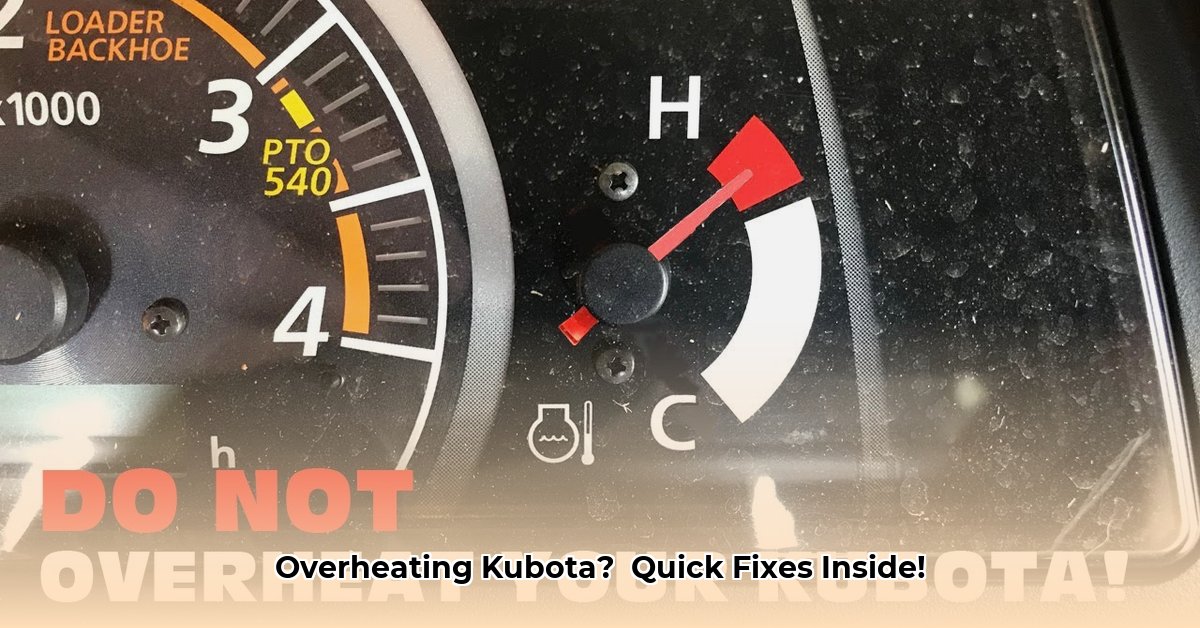
Kubota tractors are known for their reliability, but overheating can strike even the toughest machines. A hot Kubota means downtime, costly repairs, and potential engine damage. This guide provides step-by-step solutions to diagnose and fix common overheating causes, keeping your Kubota running cool and efficiently. For more in-depth troubleshooting, check out this helpful resource.
Diagnosing Kubota Tractor Overheating: A Step-by-Step Guide
Overheating isn't a single problem; it's a symptom. Let's systematically investigate the most common culprits, prioritizing simple checks before moving to more complex repairs. Remember, safety first! Always turn off and allow the engine to cool completely before working on it.
1. Assessing the Coolant System: The First Line of Defense
Before diving into complex repairs, let's begin with the most accessible components of your Kubota's cooling system.
Step 1: Check the Coolant Level (Low coolant is often the first sign of a problem. Check the reservoir regularly.) Is the coolant level low? This could indicate a leak somewhere in the system.
Step 2: Inspect Radiator and Hoses (Visual inspection can locate obvious leaks or damage.) Carefully inspect the radiator for damage, leaks, or clogs. Look for cracks, bulges, or leaks in the hoses. Replace any damaged components immediately.
Step 3: Radiator Cleaning (A clogged radiator restricts airflow, hindering cooling.) If the radiator is visibly dirty or clogged with debris, clean it thoroughly using compressed air and a soft brush. This simple step often solves the issue.
Step 4: Inspect the Fan and Belt (Ensuring proper fan function and belt integrity are crucial for adequate cooling.) Is the fan running correctly? Is the belt worn, cracked, or loose? Replace the belt if necessary. A worn belt can reduce fan performance, directly impacting cooling.
2. Investigating More Complex Issues: When the Basics Fail
If the basic checks above don't pinpoint the cause, it's time to investigate more intricate components.
Step 1: Pressure Test the Cooling System (This test reveals hidden leaks, even microscopic ones, in the cooling system.) A pressure test is crucial for identifying leaks not visible to the naked eye. Pressure testing helps identify compromised head gaskets, pinhole leaks in the radiator, or other subtle issues.
Step 2: Inspect the Water Pump (The water pump is essential for circulating coolant; malfunction can lead to overheating.) A malfunctioning water pump will stop coolant circulation resulting in overheating. Check for leaks, stiffness, and ensure proper belt tension.
Step 3: Thermostat Check (A malfunctioning thermostat can prevent proper coolant flow.) A faulty thermostat can prevent the engine from reaching the correct operating temperature or prevent coolant circulation altogether. Replace if necessary.
Step 4: Assess the Head Gasket (Head gasket failure is a serious issue requiring professional attention. Check for milky oil or coolant contamination.) A head gasket leak is a serious problem, allowing coolant to mix with engine oil. Check your oil for signs of milky residue or your coolant for traces of oil. A head gasket replacement necessitates professional help.
3. Advanced Diagnostics and Professional Assistance
For complex issues, professional help is crucial. Attempting advanced repairs without experience can cause further damage.
When to Call a Professional:
- Persistent Overheating: If you've addressed the basic checks and the problem persists.
- Head Gasket Suspicion: Signs of coolant in the oil or vice versa indicate a possible head gasket problem, warranting professional attention.
- Unidentified Leaks: If the pressure test reveals a leak but its source isn't obvious.
- Significant Engine Irregularities: Other engine problems accompanying overheating may require an expert's diagnosis.
Preventative Maintenance: Keeping Your Kubota Running Cool
Preventative maintenance is key to avoiding overheating issues. Regular checks and simple steps can go a long way.
- Regular Coolant Flushes: Flush your cooling system every 2-3 years to remove contaminants and maintain cooling efficiency.
- Annual Radiator Cleaning: Clean the radiator fins at least annually, more frequently in high-dust environments.
- Fluid Level Checks: Regular checks of coolant and engine oil levels can catch problems before they escalate.
- Hose and Belt Inspections: Inspect hoses and belts for wear and tear; replace damaged components immediately.
By understanding the basic causes of Kubota tractor overheating and implementing a systematic approach, you can maintain your equipment's optimal operating temperature and efficiency, avoiding costly repairs and extending its life. Remember, preventative maintenance saves you time, money, and potential headaches down the road.